
In this interview, we’re chatting to Maia Vepkhvadze, a greenkeeper currently working at Lofoten Links in Norway. Maia’s journey into the industry began by chance during the COVID-19 pandemic, when a job advertisement introduced her to a profession she had never heard of before. Since becoming Georgia’s first female greenkeeper, she has built an international career working across Northern Europe and continually seeking new challenges. Here, she talks about starting out in an unfamiliar industry, adapting to life and work abroad, the unique experience of maintaining a golf course above the Arctic Circle, the importance of teamwork in greenkeeping, and why a passion for the profession is essential for anyone looking to join the industry.
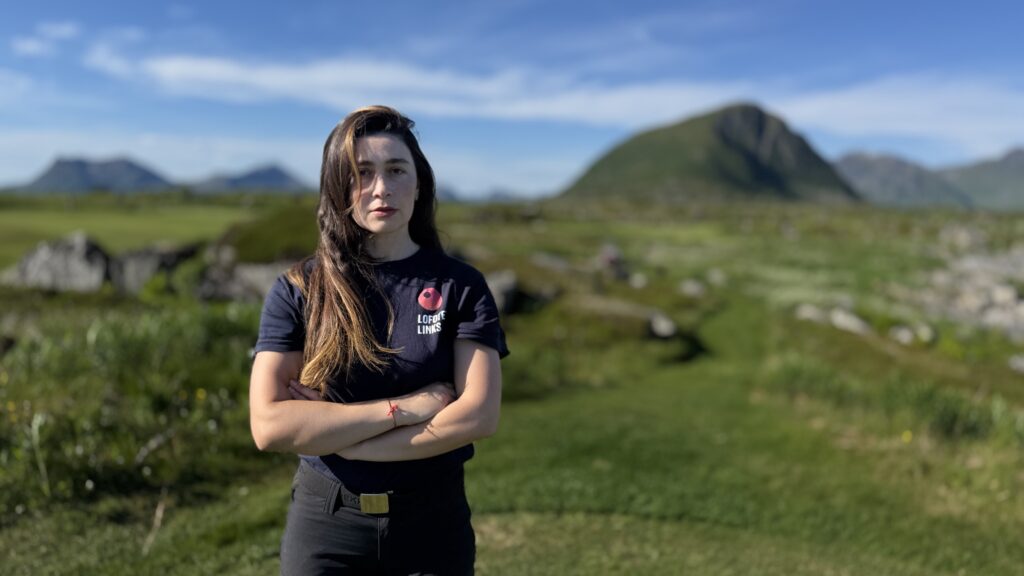
Q: What inspired you to pursue a career in turf?
My journey into greenkeeping began in 2020 during the COVID-19 pandemic. Many businesses closed, and I found myself unemployed at home.
While searching for a job, I came across a greenkeeper vacancy by chance. At the time, this profession was completely unknown to me. Turf management is not a particularly developed field in Georgia, and I had never even heard of greenkeeping before. The job advertisement stated that full training would be provided, so I decided to submit an application.
Soon after, I was invited for an interview. Traveling during the pandemic was very difficult, but I did everything I could to get to the golf course. I successfully passed the interview and became the first female greenkeeper in Georgia. Looking back today, I realize that a single application completely changed my life.
Q: How did you find your current job?
After working in Estonia, I was looking for a new opportunity. I wanted a place that would be more challenging, full of new experiences, and where I could push myself even further.
I am currently working my second season at Lofoten Links in Norway. Throughout my career, I have always looked for opportunities that would challenge me and help me grow. Lofoten was exactly the kind of place where I specifically wanted to work because of its unique environment and outstanding reputation.
Q: What is your favourite part about working in sports turf?
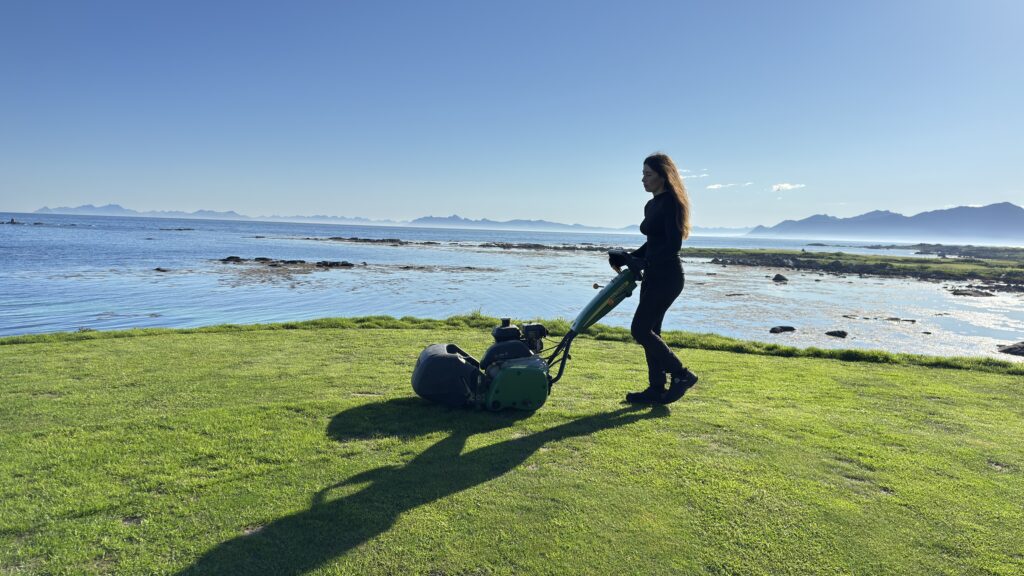
My favorite part is mowing greens very early in the morning. It is that time of day when the course is still quiet and feels as though it belongs entirely to you.
During those moments, you can see everything more clearly—every line, every detail, the movement of the grass, and the condition of the surface. Nature seems to welcome the beginning of a new day, the light gradually changes, and there is a unique sense of peace and balance across the entire course.
These are the moments when you truly realize how alive a golf course is. Everything is constantly changing—moisture levels, light, the grass’s response—and as a greenkeeper, you become part of that process.
At times like these, work is no longer just a task for me—it becomes a process of observing nature, learning from it, and working alongside it.
To be honest, I enjoy almost every task on the course. Every job has its purpose, and ultimately everything contributes to one goal: creating the best possible playing conditions for golfers.
Q: What’s the most challenging problem you’ve faced while working on sports turf, and how did you handle it?
My biggest challenge was leaving my country for the first time and starting a new life and career in a completely unfamiliar environment. I had high expectations, but at the same time I was nervous about how I would adapt.
The several years I spent in Northern Europe were especially important in shaping my professional development. I have never come from a wealthy family, so I knew that every opportunity would require a great deal of hard work. I worked long hours, never avoided difficult tasks, and constantly tried to learn.
Those years strengthened me tremendously, both professionally and personally, and I still consider them among the most important experiences of my life.
Q: If you could switch roles with any grounds/greenkeeping team for a day, whose job would you want to try and why?
I would love the opportunity to work with the team at Cape Wickham Golf Links one day.
There are many remarkable golf courses around the world, but the one that resonates with me the most is Cape Wickham Golf Links. I am especially interested in learning about their daily operations, maintenance standards, and the challenges they face.
Working with that team would be valuable not only from the perspective of sharing professional experience, but also because Cape Wickham is located in a completely different natural environment and climate. That difference is exactly what motivates me—I am confident that my experience, strong work ethic, and dedication will allow me to successfully meet the expectations, at the same time, I see this opportunity as a chance to further develop my skills, and continue growing within the industry.
Q: How do you unwind and relax after a challenging day of work?
Norway made me fall in love with hiking. I enjoy spending time outdoors, discovering new places, and connecting with the environment that is also such an important part of my daily work.
I also love fishing with my sister. Both activities help me clear my mind, relieve stress, and appreciate the incredible nature that surrounds me.
In addition, I really enjoy playing golf. For me, it is not only a hobby but also an important professional experience. I believe every greenkeeper should play golf because it helps you better understand what a course needs from a golfer’s perspective.
It gives me the opportunity to understand the finer details—how surfaces affect play, what creates a comfortable experience for golfers, and how our maintenance practices can contribute to better playing conditions.
Q: Share a funny or unexpected moment that happened during your career.
This actually happened just two days ago, and I still can’t quite believe it.
I was aerating greens with a tractor. As usual, I placed my phone on the dashboard—what I thought was my “safe place.”
Everything went normally until I finished the job and went to pick up my phone—it was gone.
My first reaction was the obvious one: it must have fallen on the ground.
I started searching everywhere—my pockets, the seat, the floor, the ground around the tractor. Nothing. At that point I was thinking, “Okay, maybe the tractor ate my phone.”
Eventually, I began inspecting the tractor more thoroughly and discovered a tiny, almost invisible gap between the windshield and the dashboard. My phone had somehow fallen directly into it.
I called the mechanic and asked: “How do I get it out without taking the tractor apart?”
There was a pause, and then he replied: “The first question is… how did you even manage to drop it in there?”
I spent the entire day without my phone, although fortunately my music kept playing.
In the end, there was no other option—I partially disassembled the tractor and finally recovered my phone.
The next day, my Superintendent laughed and said: “Maia, next time put your phone somewhere safer.”
Q: What’s the most rewarding aspect of your current job role?
I love my job and the profession of greenkeeping itself, but the greatest value of working at Lofoten Links is the team.
We have a team where everyone is willing to share their knowledge and experience. It does not matter how many years of experience you have—there is always something new to learn. That environment motivates me every day to become better.
I especially appreciate the fact that we listen to each other’s ideas. Often, the best solutions come from ordinary daily conversations. When you are surrounded by people who genuinely love their work and are constantly striving to improve, it has a positive influence on you as well.
My Superintendent, Jerry Mulvihill, is a unique leader. Conversations with him are not simply about receiving instructions. We often discuss course conditions, weather, various challenges, and details that may seem insignificant at first but ultimately have a major impact on results.
He taught me that a good greenkeeper is not created by technical knowledge alone. Observation, patience, attitude, and teamwork are equally important.
Working at Lofoten, I feel that I am not simply doing a job—I am developing every day, both as a professional and as a person. That is what makes this position so valuable and enjoyable to me.
Q: What’s one piece of greenkeeping equipment you couldn’t live without, and how does it make your job easier or more enjoyable?
If I could choose only one, it would definitely be a hole-changing tool.
This might surprise many people because they often think of large machinery or complex equipment, but in my opinion, it is the small details that make the biggest difference on a golf course.
The hole is the ultimate target for every golfer. Throughout the round, the goal is to get the ball into that hole, so its quality, cleanliness, and precision are extremely important. A perfectly changed hole is not only visually appealing—it also affects fairness and the overall playing experience.
I always pay close attention to this process. It is important that the edges are clean, the surface is properly finished, and everything is completed to the highest professional standard. Players may not notice how much time and attention went into the job, but they will certainly notice if it has been done poorly.
That is why I consider hole changing to be one of the most important daily tasks. It is a small detail that ultimately has a significant impact on the golfer’s overall impression of the course.
Q: Who has had the biggest impact on you in your career role and why?
The greatest influence on my career has been Lofoten Links.
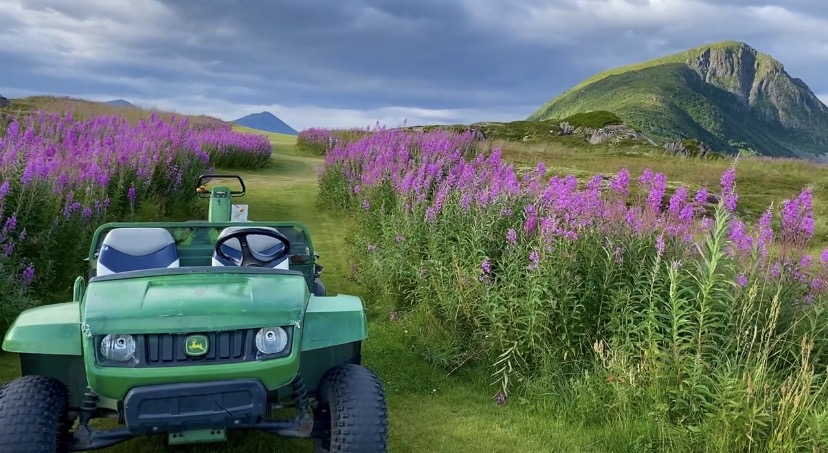
Before arriving here, I had already gained experience in several countries, but Lofoten completely changed the way I see greenkeeping. Working above the Arctic Circle presents daily challenges. The weather can change completely within a matter of hours, and conditions often contradict what you know from theory or previous experience.
Here, you cannot rely on the same methods all the time. Every day requires analyzing the environment, the weather, and the condition of the course before making decisions.
This experience has not only made me a better greenkeeper but also a more patient, observant, and adaptable person. I learned that sometimes the best decision is not immediate action, but careful observation of the environment.
That is why I believe Lofoten is the place that has shaped me the most as a professional and had the greatest impact on my career.
Q: What advice do you have for new people looking to join the industry?
My first piece of advice would be not to enter greenkeeping simply because it is a job. In my opinion, this profession is not for everyone. To succeed in it, you have to genuinely love what you do.
Many people think greenkeeping is only about mowing greens and changing holes, but in reality it is much more than that. It is a profession that requires responsibility, observation, hard work, and patience every single day.
You may start the morning in clean clothes and finish the day covered in bunker sand, wearing muddy boots, or carrying a shovel. Sometimes you work in difficult weather conditions—in the rain, in strong winds, or when most people are still asleep.
If you do not enjoy nature, if you are not attentive to details, and if you do not take satisfaction from hard work, this profession will be difficult. However, if you enjoy working outdoors, like seeing the results of your efforts, and want to learn something new every day, greenkeeping is one of the most rewarding professions you can choose.
I would also encourage newcomers not to be afraid of asking questions and learning from others. In this industry, learning never stops. I still learn something new every day.
And most importantly, you need to be a morning person. A greenkeeper’s day begins when most people are still asleep.
Q: Finally, what message or insight would you like to share with others about the role of organizations like International Greenkeepers for Hire in connecting professionals with opportunities abroad?
I believe that organizations that connect professionals with international opportunities can play an important role in helping individuals expand their careers, gain valuable experience, and build global networks. In industries such as greenkeeping, where practical knowledge and exposure to different climates, cultures, and management practices are highly valuable, these connections can benefit both employers and employees.
I believe that creating pathways for skilled professionals to work abroad contributes to professional development, knowledge sharing, and the overall advancement of the industry.
Thanks so much to Maia for taking the time to chat to us in this interview. If you’d like to contact her, you can find her on LinkedIn here.