
In this episode, we’re interviewing Josh Staunton of Staunts on the Grass. He’s a professional footballer, currently playing for Poole Town, and has recently stepped into a turf management role, bringing a unique perspective to the groundscare industry. When the time was right, he made the leap of faith and started his own turf maintenance business, and has since founded a sports turf contracting company, Southwest Turf Solutions.
How did you come out of football and find grounds management?
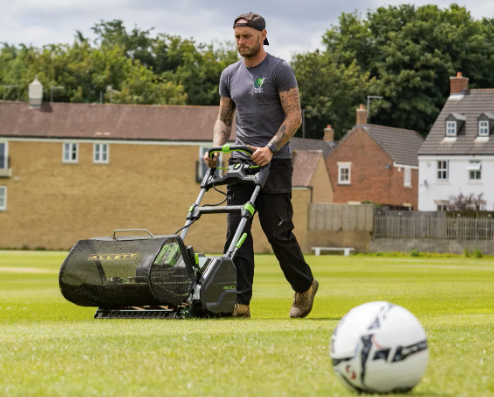
I always knew I had a bit of an unhealthy obsession with grass. To generalize, footballers often have no appreciation for the grass and what gets into getting a game on every Saturday. As a player, I would always say, “don’t walk on the pitch”, or, “Do your footwork on the side of the pitch”. To any groundsmen out there, I was always on your side! I used to take an interest in the details on pitches, such as around the sprinkler heads, as I knew how difficult they were to get right.
All through my playing career I was very conscious of building a relationship with groundsmen and learning on the job without being on the tools. I was aware that football wouldn’t last forever and I needed to be ready to move into something when the time came. Being a footballer, you see the work that goes into maintaining a beautiful pitch. It was almost a very natural process. The time was always going to come, it just came a bit sooner than I hoped for. Sometimes, these things happen for a reason and you just have to go with it. I’m happy with where I am.
So, when was that first opportunity to get into the groundscare world?
My playing career was winding down due to a knee injury. I could see the end was in sight, so I had to be pragmatic for my family. I didn’t have any connections but I was absolutely dedicated to my back garden. It was only a small patch of grass but I would use it as my experiment ground. I proved that I could do it and I had a good circle of people around me.
I’ve done my courses online but I don’t have the luxury of a university degree. I was working really hard, dedicated, and willing to learn. I bought a van and got lucky in the sense that, in the area, my name was worth a bit of weight. There’s always an ongoing joke, the boys in the dressing room would say, “where’s Staunts“, and the answer would be, “Staunts is on the grass”. That’s where my business name, Staunts on the Grass, came from.
I was always offering to help the groundsmen, but they would never take up my offer. I started with a big vision and not much else. I had a lawnmower, a van, and a few other bits of kit, and I thought, right, I’m going to make a difference, I’ve got to start somewhere. Luckily, a few people in the area gave me a few opportunities, as well as the local cricket club. I’m proud of what I achieved, and it’s just come from real hard work and attention to detail. I always promise I’ll give people the best surface.
How have you been able to take the skills you learned during your professional sports career, such as discipline, routine, and leadership, and transfer those across to pitch maintenance?
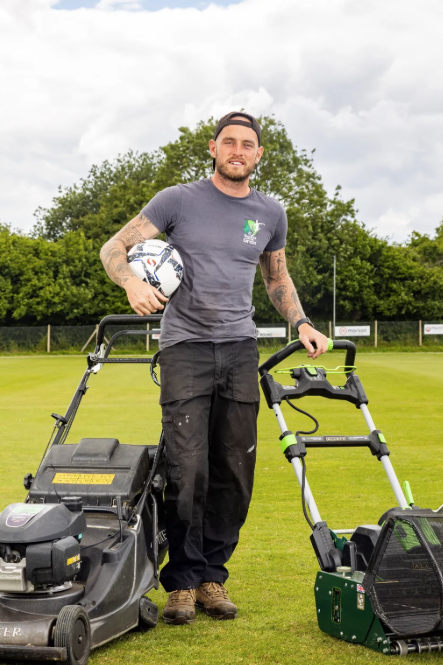
The beauty of football is that it gives you a lot of skills that are very transferable. There’s probably not a profession in the world where you’re quite so disciplined in timing. You don’t go into a standard office job and get fired for being five minutes late. So, moving into grounds management, when you say you’re going to show up and nine times out of 10 you do, it goes a long way in building trust. This is especially the case when you’re working on a pitch spending hours on your own and a lot of what you do is unseen. That’s why trust is so important.
How has your venture into grounds management helped your football career?
To clarify, I still play part-time. It actually works quite well as I have the perspective as a player and a groundsperson, so I can give advice and instructions to other players based on experience in both areas. As a player, I’ve always had the view that the pitch is the most important part of a football game. A player isn’t guaranteed to play every game, but that pitch will be used in every game. A good-quality pitch can also be more motivating for players – they’re more likely to want to play on a well-maintained pitch with crisp lines.
What would you say has been the biggest challenge that you’ve faced in your new career?
The loneliness can be tough. I also found pricing fairly hard, especially as I’m prone to giving more than what I’m paid for. Overall, the most difficult thing was having the bravery to start. I was stepping into a world that I didn’t know many people in, I didn’t have any credibility. It was a bit daunting, but it’s been good fun. There are also routine headaches with maintaining turf, and there’s always something: machinery going wrong, birds, and so on. But the challenge is what makes it interesting.
When you first started out, did anything go wrong on the job?
Yes, I had one day down at Poole where I was cutting before a game. It backs onto a school field with a gate in between. Someone had thrown a marble onto the pitch and it took a chunk out of the bottom blade on my mower. I was on my first set of stripes, with no time to get another machine and a game tomorrow. Luckily, by the time I’d double cut it, you couldn’t really notice any flaws.
You post a lot on social media. How do you feel that growing the social aspect online has helped you grow your company?
I had a period where I was very “on” my social media. This summer, due to work commitments, I had to reluctantly step back from my videos. I’ve loved it, and when I was obsessed with my own garden, I thought I was one of a very few. But I can’t believe how many people genuinely love their grass and want to give and receive advice. The engagement has been incredible. Documenting my story has been really good for me. As I wasn’t known in the industry, I knew I’d have to give people something to look at. There’s a much bigger audience for it than I actually gave credit for.
Where do you see your career heading in the next five years?
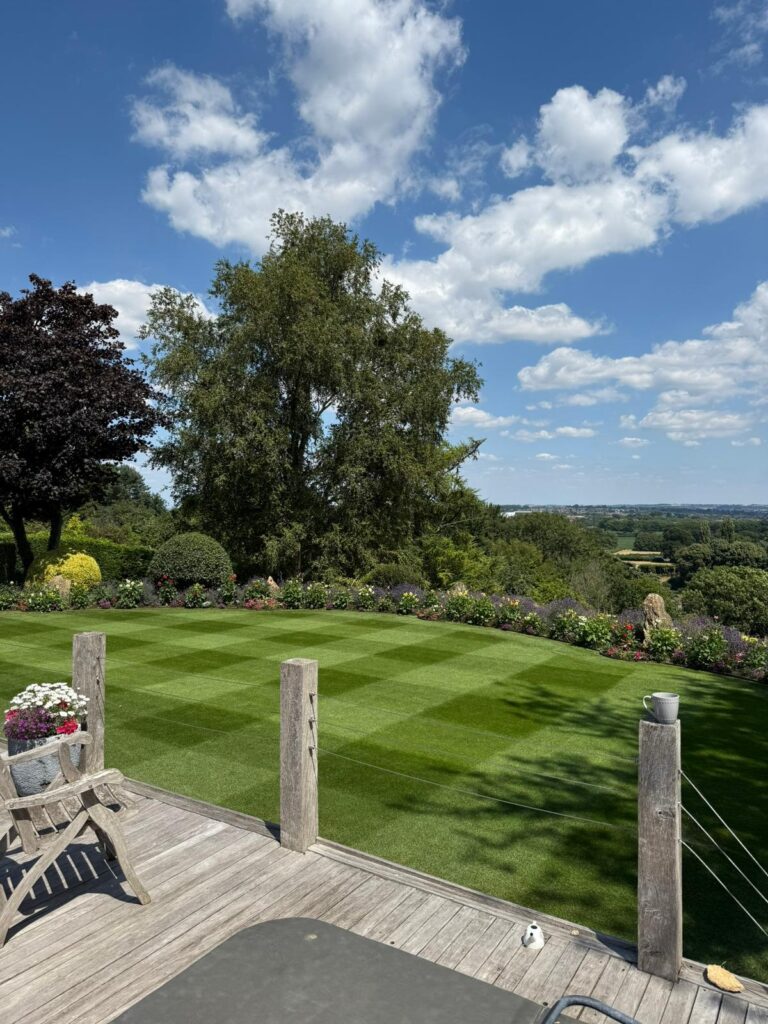
I’ve created a second company now, Southwest Turf Solutions, as I’m keen to grow as a business and start a team. We’ve invested in equipment and are offering contracting services. I keep my baby in my name, but I knew that if I wanted to build a business, I’d need a team on board. In the local area, we’ve developed a platform where there’s that level of trust, where it’s like, “It works, so let’s buy into that”. I enjoy watching that work come to life. I renovated several pitches this summer, and I’ve never been involved in that before. I love that side of things. If anyone needs any vertidraining around Dorset and Yeovil, give me a shout!
If you could switch roles with any greenkeeping or grounds team for the day, whose job would you choose and why?
I would love to be a groundsman for a day. I would love to have a go with the lighting rigs and things like that. I’d want to experience that for a week, although I’d probably get overwhelmed!
What do you like to do to unwind and relax after a challenging day on the job?
I’ll go home and see my little daughter, and she gives me a cuddle. It just puts all your problems into perspective.
Any unexpected moments that have happened in your football or gardening career?
One of the weirdest moments was when I was driving to cut a pitch in Frome and it felt like we’d gone down a pothole. We’d planned to fit four pitches in that day, and as you know, when you’re so busy, something is guaranteed to go wrong. We got to Frome and discovered that the wheel had come off our brand new trailer. I had no idea that the wheel had come off and I instantly panicked and started looking up road traffic news in the area to see if there were any reports of a vehicle being hit by a wheel. We couldn’t drive around with one wheel, so it disrupted the whole day. I wasn’t worried about losing the wheel, I was worried about the damage I might have caused. Luckily, we seemed to have got away with it.
What would you say has been the most rewarding part of the job so far?
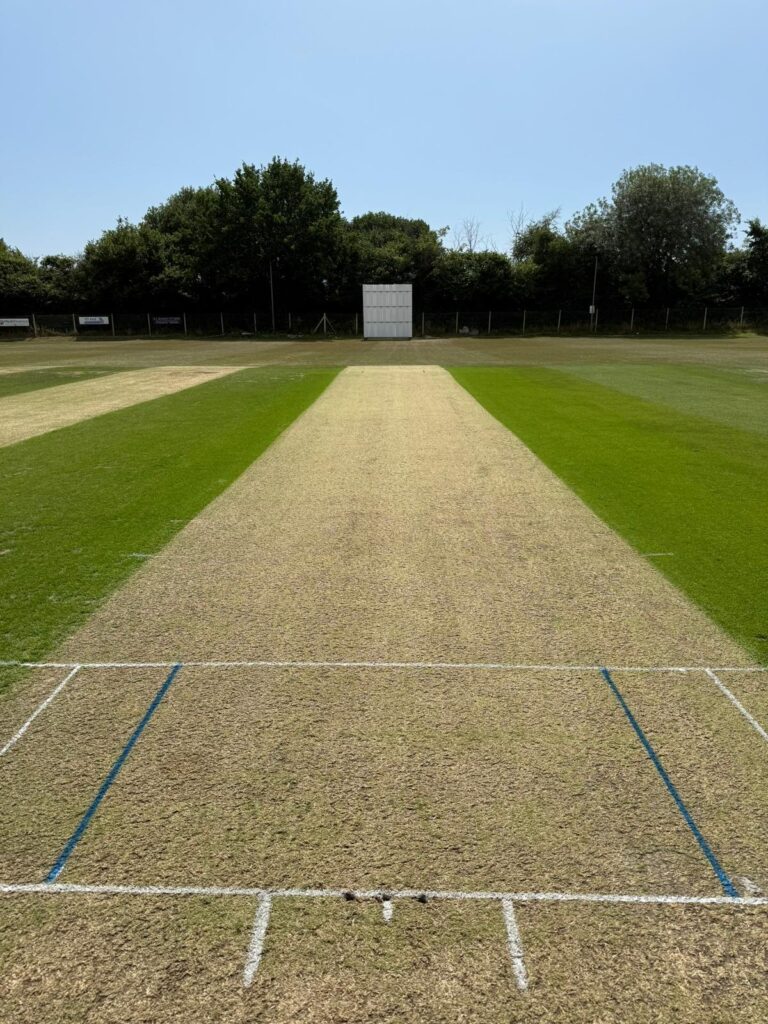
Really changing pitches. I think you’ve seen on my social media, Yeovil Cricket was in a bad way and Poole Town Football was in a bad way. Any improvement would have been drastically appreciated. I managed to make them both really, really good, and I’ll sometimes look back at those “before” pictures when I’m having a bad day to show how far we’ve come. That turnaround is the most rewarding thing for me, all by committing to decent practices, listening to advice, working hard, and trusting your instincts.
What’s your one piece of equipment that you couldn’t live without?
I think leaf blowers are a really underappreciated piece of kit. But something I really couldn’t live without is my van. Before I bought it, I’d wonder why people needed them, but vans are amazing. They’re convenient inside and outside of work. I’ve taken mine on holiday to Centre Parks and everything. Even if I never worked in the industry again, I’d keep my van. I just wish people had told me that you have to drive 10 miles per hour slower!
Who has had the biggest impact on your sports turf career and why?
Dan Hibbert (Lawn Expert) has been excellent to me. We’ve built a great friendship, and any question I’ve had, he’s been there, done that on a smaller scale. My partner who I have the second company with, Stuart Antell, was a groundsperson a Yeovil when I met him. He’s been brilliant and we work well together. Those two people have made massive marks on me and given me a lot of advice. I’m forever grateful for them, because they didn’t have to help. I was just a footballer who was coming into their world.
What advice would you have for new people wanting to join the industry, especially those who are making a career change?
Be brave enough to do it, but listen. There’s only so much you can learn in a book. It’s one of the most old-school industries, and experience is invaluable.
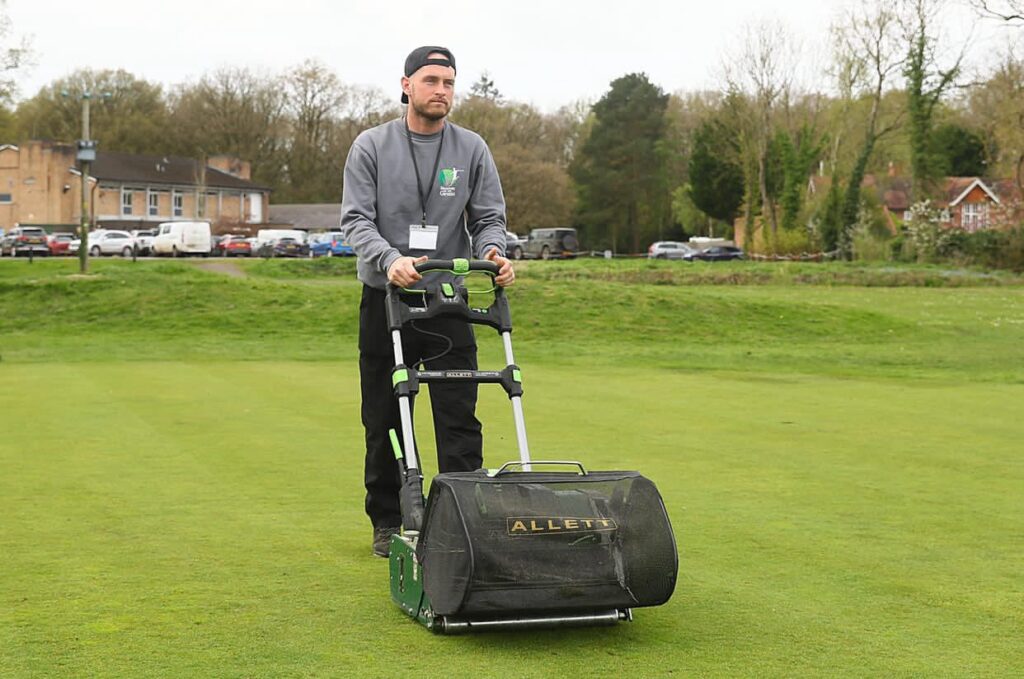
Big thanks to Josh for taking the time to speak to us and share his story. You can find him at Instagram @stauntsonthegrass, and on LinkedIn as Josh Staunton.