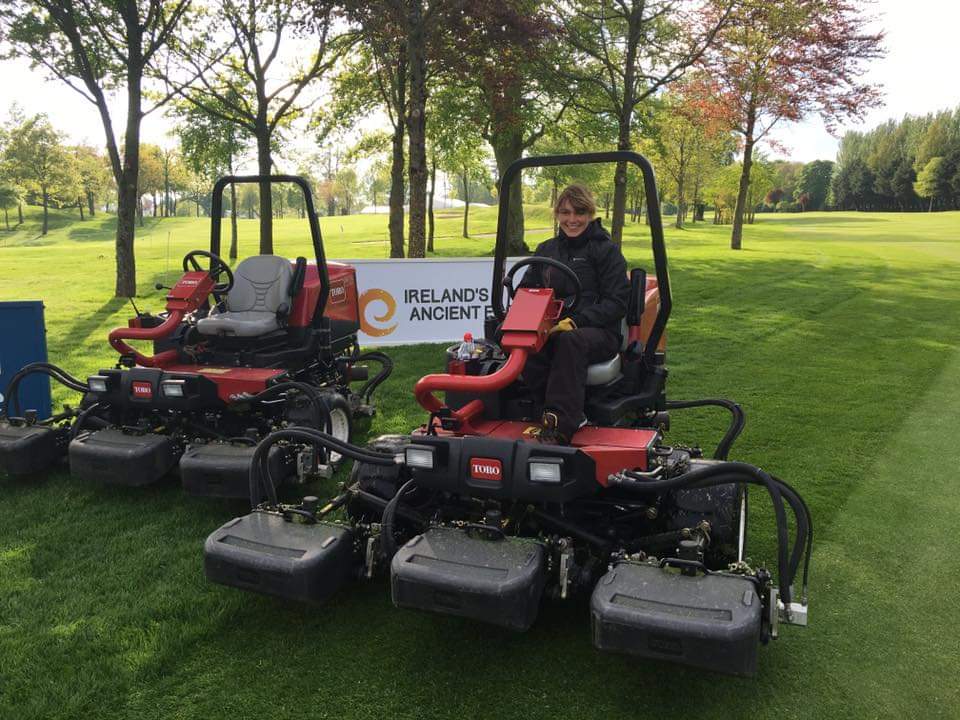
In this interview, we’re chatting to Kate Stillwell, Head Greenkeeper of GKG Golf Course in Iceland. With her father working as Head Agronomist on the European Tour for more than 40 years, she spent much of her childhood travelling to world-class golf courses and developing a passion for the industry from a young age. Here, she talks about her early career experiences working on tournaments across the world, the challenges of managing the grow-in of 18 Pure Distinction greens at The Inspiration Golf Club near London, the unique challenges that Icelandic weather brings to turf management, and why she believes more people should experience working abroad.
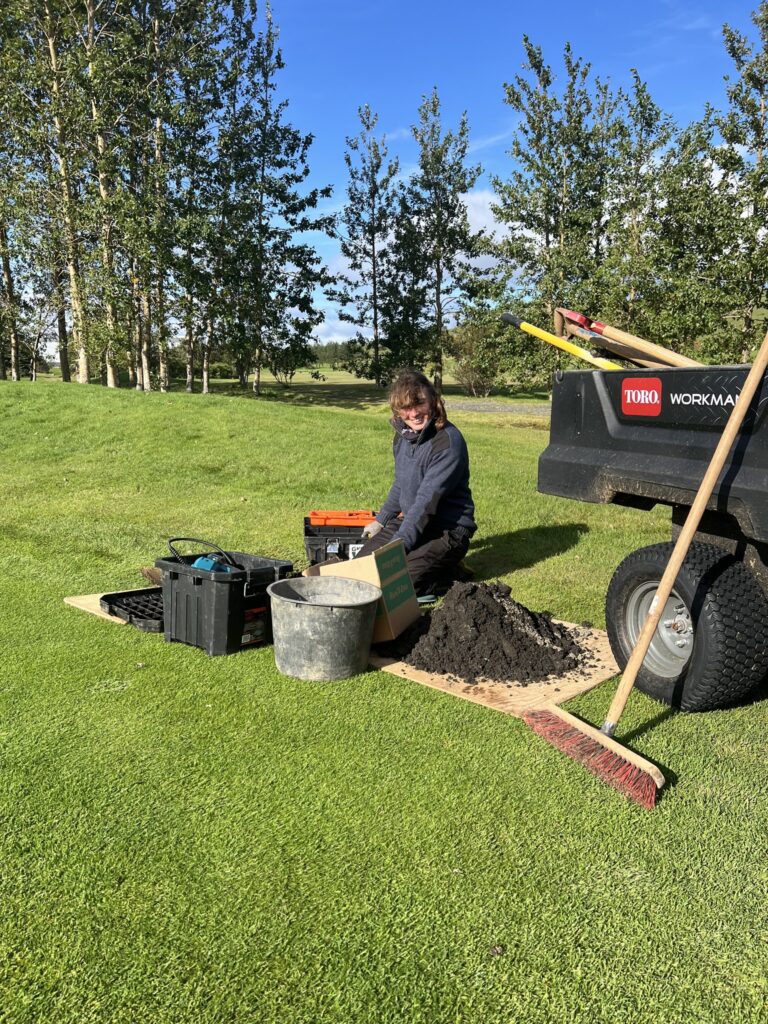
Q: How did you get into greenkeeping?
A: My father was the Head Agronomist on the European Tour for 40-odd years. It was always in the family — my two brothers are greenkeepers, and my sister works in the industry as my dad’s secretary. I grew up on golf courses. I absolutely loved it as a child. I was on world-class golf courses from a very young age, travelling the world. Who wouldn’t love that? I grew up with a passion; it was something I loved doing. It didn’t feel like work, and it’s just grown from there. I don’t think I would have gone into greenkeeping if it wasn’t already in my family, as I wouldn’t have been exposed to it.
Q: Where is home for you?
A: I’ve got multiple homes. I have a house in Sussex (in the south of England), but home right now is Iceland. I’ve been here nearly two years in April, and I’ve started to get more of a network of friends over here. I think moving to a new country is something most people should do. It’s really opened my eyes to a new culture and a new way of doing things. That’s what I’ve always loved to do, travelling and seeing different ways of doing things, because it’s quite close-minded to think that one country does it the best. You can pick and choose from every country what they do well.
Q: What was your first full-time role in greenkeeping?
A: We had a golf course in Sussex called Avisford Park, and that’s where we based ourselves. I was always working out from there with the Ladies’ Tour, the Challenge Tour, the European Tour. We’d go to different countries, such as Morocco, China, India, Switzerland, and Sweden. Each country needed something different from the team, because in places like China, Morocco, and India, they have the manpower, but they don’t necessarily have the skillset or the knowledge that’s required at a tournament. On occasions like that, it’d be required that I jump in and guide them. I became the link between the Head Greenkeeper and the agronomist team, explaining, “This is what you need to do.”
At bigger golf courses, like Crans (Sur Sierre) in Switzerland, all you need is someone who’s capable on a machine to do what was required, and I could flip between jobs quite fast. Then, I moved to a golf course near London called The Inspiration. I did a grow-in there of 18 Pure Distinction greens. That was on a brand-new site, and that’s where I stepped up into more of a managerial role.
Q: Did you pick up any qualifications before joining the industry?
A: I was working in the industry when I was really young, so I never really “joined” — it’s something I’ve grown up with. I’ve added skills in later years: I was on the Women in Golf Leadership Programme, which was invaluable and opened so many doors. I’ve also done online skills courses, such as leading teams, conflict management, and how to do appraisals. I found that really helped in West London, when I was building a team. You get so many different personalities. I also did a two-day irrigation course in Leicester City, which I absolutely loved. I’m very fortunate that Rain Bird took an interest in me, and they’ve really accelerated my career in irrigation, too. I certainly value those skills. I don’t think I’ll ever stop being amazed by how little I know about some subjects.
Q: Going back to your time at the Inspiration Golf Course, what sort of challenges did the grow-in bring?
A: When I first moved there, it was as a deputy. It was one of the best things that ever happened to me. Because the expectations were a bit lower because I hadn’t done one before, it allowed us to really excel at it. We formed a team — there were only two people there before, and they’d never done a grow-in; one was an apprentice and one had a council background. We took on a couple of apprentices, and they were like sponges; they were the biggest asset to our golf course. We were very lucky to have Lewis Sharp from Tee-2-Green, who was on hand at every stage, saying, “This is what Pure Distinction needs, this is what you need to do with it.” The irrigation side of things taught me a lot, because the amount of problems that come up with a new irrigation system…
At the time, it was “how many plates can you spin?” Crazy hours, getting up at 4 in the morning. We were seeding two greens a week. Then we had dogs coming onto the course, and we’re trying to repair the greens, we’ve got electric nets stopping the wildlife. There are so many foxes around London. We had a serious drought at the time, which was lucky, as it stopped poa seeds from coming onto the green and contaminating it. They were building bunkers while we were there as well. That exposure to so many different areas was invaluable. It was an incredible process, and something you never usually appreciate on a golf course: who put it there and why.
Q: After you finished your time at The Inspiration, what was the next step for you?
A: I thought I wanted to move further south, nearer to home. Meanwhile, I saw an advert for Iceland. It’s not quite Sussex, but I just applied to work in Iceland. I was drawn in by the extremeness of the location and the climate. I didn’t know what most of the problems were going to be, but I wanted to know. I haven’t turned back since — it’s been fantastic over here.
Q: How did you find the process of applying for a job overseas and moving to a new country?
A: For me, it was very easy. The golf club I’ve gone to is very well-equipped to welcome people from abroad. Everything is very calm. I think it’s fortunate that I’ve gone to Iceland and they speak good English. I did have questions about things like what you do if you need to go to hospital, the driving situation, and other things where I didn’t know the process. The golf club has been willing to help.
Q: What sort of challenges does the weather in Iceland bring?
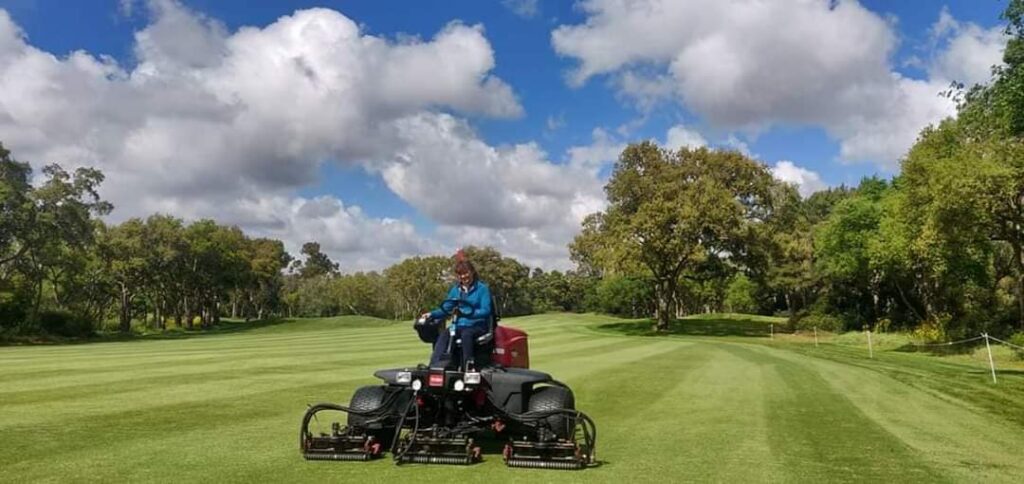
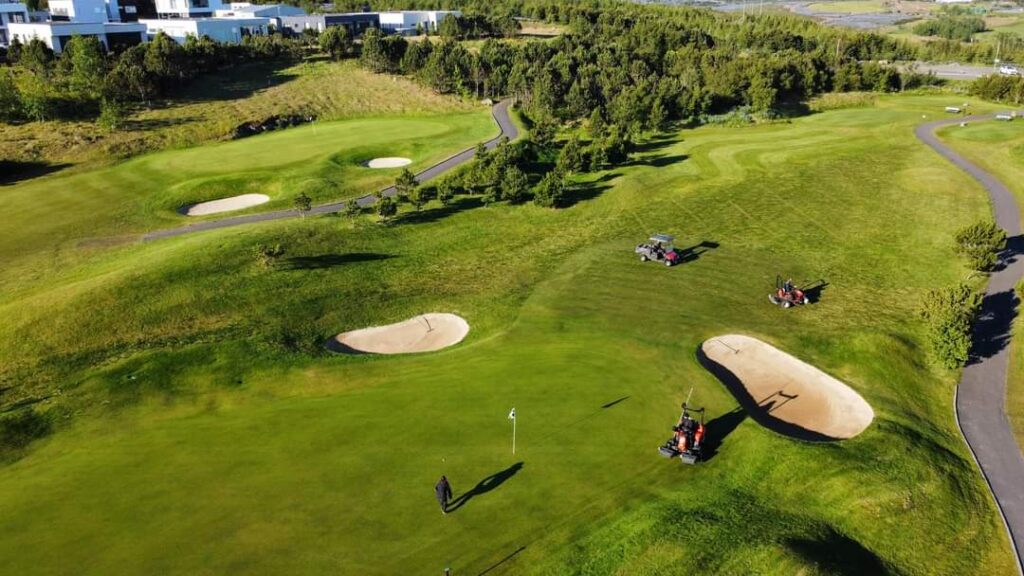
A: The weather isn’t as bad as I thought it was going to be. The temperatures aren’t generally as extreme — although last winter, it was -17°C overnight, but it doesn’t feel like -17. The wind can be really extreme here, and that’s what can kill the grass at the start of the season. The grass has got that far, and it’s just about keeping in there after the ice and snow encasement. The humidity is really low here, as well. I thought it was just going to be ice as a problem, but that’s the least of our worries. You’ve got to check the weather all the time and have your finger on the pulse.
We have so many different tools to manage these weather patterns. We’ll often ring up the neighbouring golf course to discuss issues we’re facing. There’s a great greenkeeping community in Iceland; everyone’s really willing to share their knowledge.
Q: Does Iceland offer a pathway into the industry outside of full-time employment for people to get into the industry?
A: The people that I know have done their qualifications online. I also know some people who have done training programmes abroad, like the Ohio State Programme. There’s also a 3-year course, I think it’s “Outdoor Spaces Architecture”, which covers a lot of greenkeeping responsibilities. That requires them to be learning for something like eight months of the year, and then the rest of the year they can spend on a golf course.
Q: Is there anything different about the golf culture in Iceland?
A: Yes, you see a lot of women playing golf. In our club, we’ve nearly got a 50/50 split of male to female members. I’ve also seen more female greenkeepers here than ever before. Because they’re playing golf, they’re exposed to this world and think, “I can do that.” In the UK, you’ll be lucky if there are 5% of females on a golf course.
Q: What has been your favourite part about working in sports turf?
A: I have two answers. I would initially say irrigation, because I love it, but the reality is the people that I’ve met. I’ve been so lucky to cross paths with amazing, inspirational people, down to my apprentices. I think you can learn from absolutely everybody, and I’m privileged to have crossed paths with so many in the world.
Q: What’s the most challenging thing you’ve faced in your career and how did you overcome it?
A: Absolutely the grow-in. There was a point in time when we were pressurising the irrigation system and someone started to flush out a green. All the pressure just went from all around the golf course. We were putting on cycle and soak every two hours, and it was in the middle of cycle and soak. Irrigation heads started going down, other ones started to try to come up. We were racing back in to turn the irrigation system back off. I can look back and laugh now, but at the time, it was like, “Oh, my God.”
Q: If you could switch roles with any groundsman or greenkeeping team in the world, who would it be and why?
A: At the moment, I wouldn’t. I’m very happy on this team. I’m going to ring the bell for staying where I am at the moment. I’d love to work in Switzerland, but for now, right here.
Q: How do you unwind after a challenging day at work?
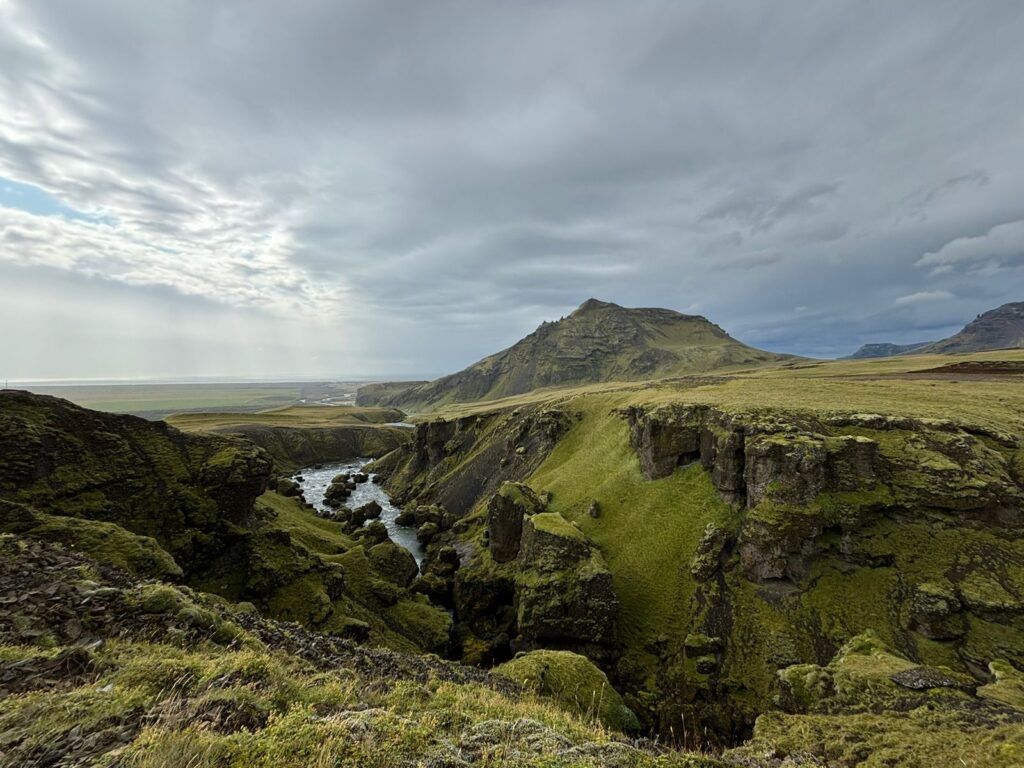
A: I’d go for a run in the mountains. I can’t think of anything better than that. In nature, seeing the beautiful views with no one there. It’s like pressing a little reset button.
Q: What’s the funniest or most unexpected moment that’s happened in your career?
A: There have been so many things that have cracked me up with laughter. One of the recent ones I think of is with our Ukrainian worker who can’t speak a single word of English or Icelandic, so it’s a game of Charades and Google Translate. I could laugh nonstop about the things that have happened. Google Translate translates my name as “whale”, so quite frequently, that’s how he will refer to me.
Q: What would you say is the most rewarding aspect of your current role?
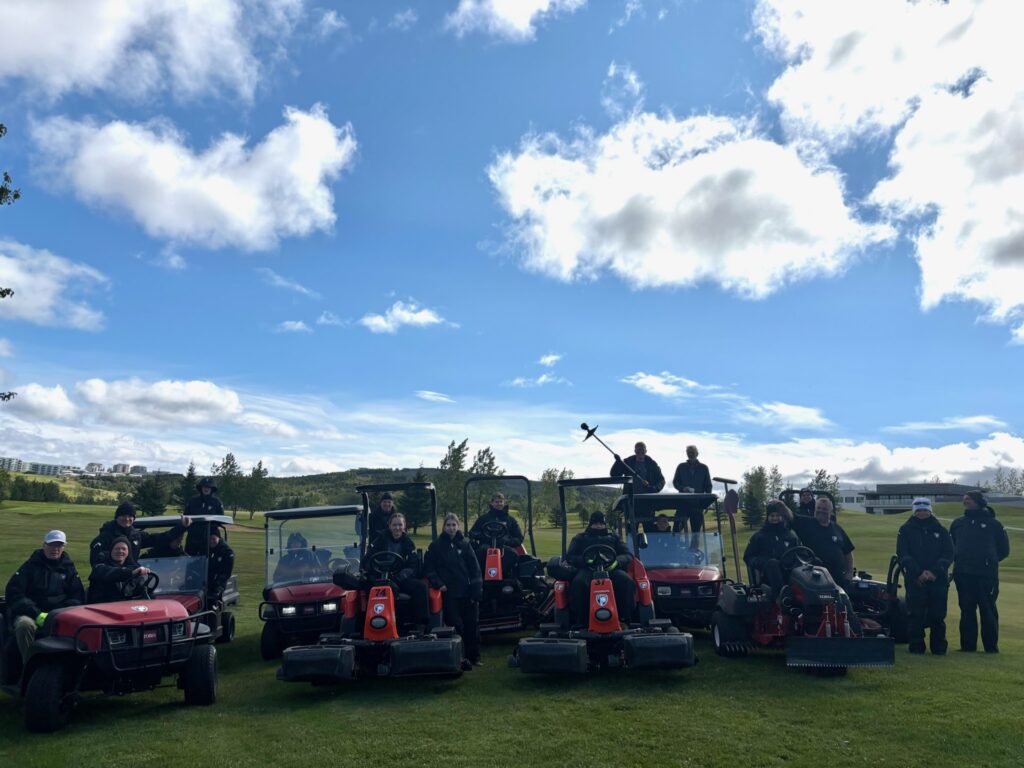
A: There are so many different things, but I love seeing something work in a trial. I ask the seasonals to be brave and not worry about sounding silly. Some of the things they come up with, I think, “Actually, that’s a really good idea. I never would have thought of that.” When you try something a bit different and think, “That seems a bit out there, but why not?”
Q: What’s the one piece of greenkeeping equipment that you couldn’t live without, and how does it make your job easier?
A: I had a conversation with my team about this, and categorically, it came back as “a knife”. I don’t know whether that’s an English thing or an Icelandic thing. The number of times that someone needs something undoing or opening, or there’s a rope that’s tied too tight. There are so many occasions when you need a knife.
Q: Who has had the biggest impact on your career so far?
A: The biggest influence would be my dad. The passion and love for what I do comes from him. There have certainly been people from the Women in Golf Leadership Programme who have shown me the way forward. Jim (Jimmy Sandison) from Rain Burst has shown a huge interest in my development and has had an unwavering confidence in me. Anything I do, he’s like, “Yes, absolutely, you can do that,” and guides the way forwards. There have been so many other people I’ve crossed paths with who have shown me the door and guided me through it.
Q: What advice would you have for people who want to join the industry from all aspects of life?
A: There are so many opportunities. It doesn’t matter what your skillset is; there are so many different avenues to go down. Even if being on a machine cutting grass isn’t for you, if you think about irrigation, a lot of people didn’t even realise that’s an option. The more people from different areas we get into greenkeeping, the more we’re going to branch out. We need to have that calm attitude; that’s something I’ve been learning over here. That’s another important part. Just take a breath and realise, A, I’m not alone in this, and B, I’m not the first person to have ever been through this before.
Thanks so much to Kate for taking the time to chat to us in this interview. If you’d like to reach out to her, you can email her at kate@gkg.is.