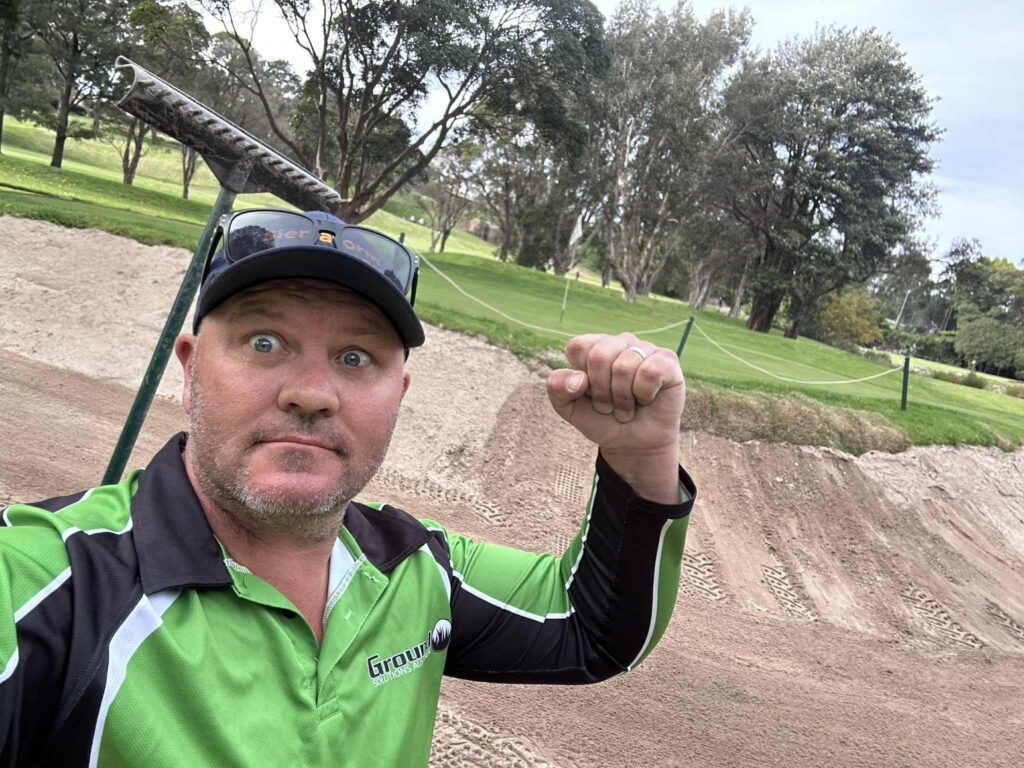
We chat to Dan Studders, a Sydney-based turf professional and managing director of Ground Solutions Australia. Dan shares his start in the grounds industry at just 12 years old, his initial experience working in golf, and his pivot into a sales role, which ultimately led him to form his own business in groundscare. He also discusses how his sales career taught him to not fear the word “no”, how starting a family presented new challenges for him as a businessman, and which piece of greenkeeping equipment is his “happy place”.
Q: Can you talk us through how you got into greenkeeping?
A: Yes. I was 12 years old… it was probably out of necessity. My father had a lawn that needed to get mowed more often than he was able to do it. He got the mower out and told me to follow the white line behind the front left wheel. The first time I got out there, I said to my mum, “Look, I’ve mown the lawn, Mum.” She said, “You’ve missed a bit”, and I’ve never missed a patch of lawn since. That’s where my greenkeeping addiction first started, with the satisfaction of that first mow. That fresh-cut smell is quite addictive.
Q: That’s quite a serious responsibility for a 12-year-old. What was the learning process like?
A: My dad showed me the way, and then I also started to expand out a bit. I’d walk the streets and hand out little post-it notes in the neighbours’ post boxes, and started to earn a bit of cash on the side. I’d go and cut lawns in the afternoons, and that’s where it all started. The business sense was instilled in me from a young age.
Q: At that time, did you envision having a career in the industry, or were you simply earning money?
A: It was earning money, but to reinvest into my business. I wanted to get a headlight for the front of my bike as I often worked late nights, and I was making a trailer to hook up to the back of my bike and then pedal the mower around rather than pushing it down the street.
Q: How important do you think that customer service side of things and work ethic were in forming the values you have today?
A: It’s something I would say is not present as much in kids today. I even find that with the apprentices that are coming through, three out of 10 might have a spark, and the others, it’s just not in them. It’s almost an epidemic among young people. My message to young people is, if you want to get ahead, just show that tenacity and eagerness. You’ll get far, because that’s what bosses out there are looking for. I remember when I got my first chance, they said it was because of my work ethic. I got the job over many more people who were a lot more qualified and experienced. Even if you’re not young, tenacity wins.
Q: What did your first move into sports turf look like? When did it become a real job for you?
A: I knew I was never going to go to university. When I was going through school, in Year 11 and 12, we had a work studies programme through school, where every Friday you would go to work instead of school. Luckily for me, one of the chaps before me worked at Club Parramatta (a golf club in West Ryde, New South Wales), and I was able to get a reference from him. I had work experience there, and then that carried on during the school holidays. When I left school, they took me on as a casual, and I worked for four months as a casual. The days at Parramatta were some of the best days of my life. You got to do everything because you had to do everything. We had no irrigation at all, so it was hand-watering everything.
Q: How important do you think apprenticeships are for this industry, for young people in particular?
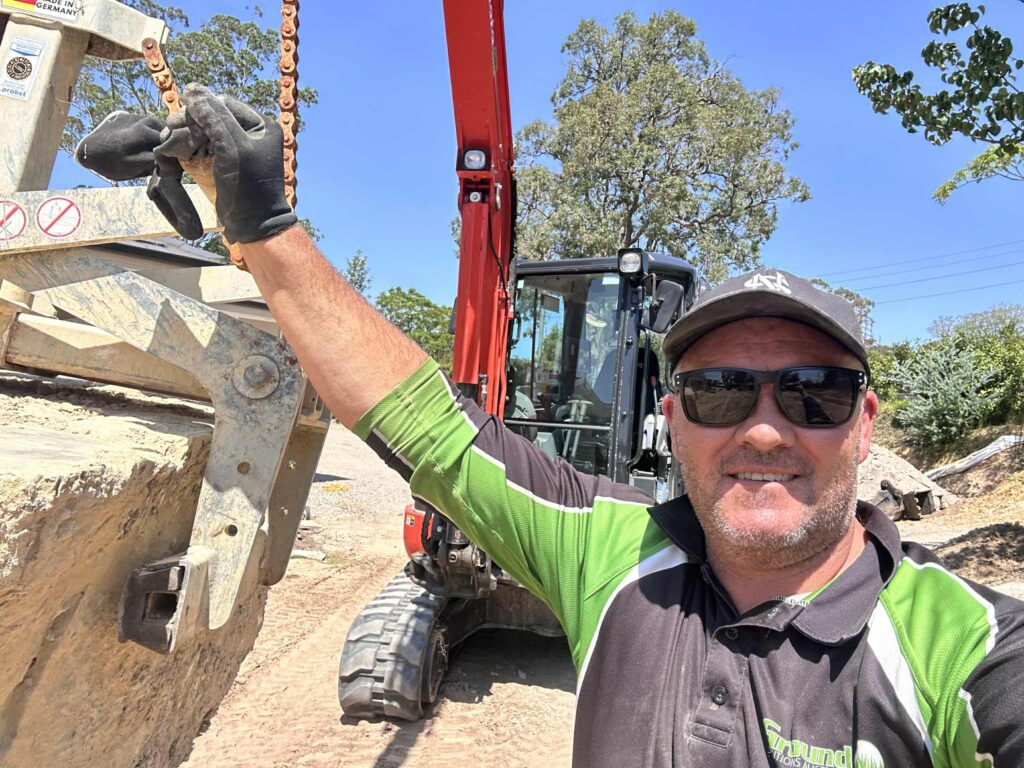
A: They’re so important. In Australia, we’re working on the job while we’re learning the job, while in other countries, you get your degree first, and then you get out and get to use it. An apprenticeship can take you anywhere, especially in the golf course industry. I can go anywhere in the world and knock on five doors, and I’m guaranteed to get a job. It is viable, and it’s something that you can take with you anywhere. It doesn’t have to be a lifetime job, either. It’s like riding a bike; you can pick it back up. I’ve got mates who have done electrical work or plumbing work, then go back to golf as an irrigation tech. It’s a great thing to get your hands dirty in all aspects of the trade because it’ll help you later in life.
Q: You then moved to Ryde Parramatta Golf Club and made the decision to take quite a significant pay cut, as well. Was that quite a difficult decision at the time?
A: Yes, but I was lucky enough to live with my grandma and not have to pay rent, so I was able to get along. But I also finished at 1:30 PM, and my commercial business started there, through necessity. I’d deliver pizzas at night. I’d finish my work, I’d go landscaping my lawns, and then I’d be at the bottle shop or delivering pizzas. It’d be almost 5 AM until midnight. Most days, I was able to sleep pretty quickly.
It was a good and bad experience. At the time, I worked for the absolute worst boss I’ve ever had. I’ve carried that on to my career as an employer and as a boss. All the things I hated about him, I did the opposite. It must work, as I now have employees who have been with me for five to 10 years.
Q: What were your main responsibilities at Ryde Parramatta? What were the pressures of maintaining a higher-profile course?
A: It was eye-opening, a lot of the things that we did and they didn’t do. I would be stuck on the jobs that I was known to be good at. I was a qualified tradesman, but I got stuck on the groundsman jobs, because the groundsmen learned that if they didn’t do it, they didn’t have to do it. They just took the easy road and stuck the new fellow on it. I did one job in the morning, and one of the groundsmen told me, “It takes us two days usually.” It did teach me a lot of things that I wouldn’t have learned if I had a good manager.
Q: When did you become confident enough to take that next step beyond club employment?
A: It was when my wife said, “You’re better than this, you should try to do something for yourself.” My dad was a salesman, so I started looking for a sales job. I interviewed for a job selling wine, which was something I was interested in, and went down that path.
That then opened the door to my next career, which was working in a sales role as a technical lawn care manager. I was selling spraying equipment, which is quite funny, as in my previous jobs, I’d never done any spraying myself. I knew the basics, but I had never been given the chance to get out and do it. But my employer probably saw the tenacity in me. I dressed up in a suit for my interview and talked my talk.
I was around 21 when I started. They gave me a truck and said, “go sell.” We had to knock on doors and hand out flyers. It was a hard slog because nobody knew who we were. You had to turn it into a game—I’d write down how many “no”s I’d get until I’d get a “yes”. Week after week, I got more confident, and I knew how to get a “yes” out of a person.
Q: And after nine months, you said you became a franchise owner as well. What gave you the confidence to take that step?
A: Well, I was given an opportunity. That was a big step; it wasn’t where my fiancé and I were looking to head. But I had an experienced family friend who encouraged me to go for it. That’s when I was chucked well in the deep end. It was definitely a new world. A lot of the support systems that were promised weren’t even in place, so I had to create a lot of the systems myself that the company still uses today.
Q: You were managing 600 customers. How did you keep that organised and maintain quality?
A: I’d maintain my days and try not to travel too far. Most lawns will have five direct potential customers within the immediate area. I made sure I pulled up and spoke to every neighbour first. I’d say, “I’m here today—how about I do you a half price one, just so you can see what it’s like?” I started referral systems, so if my customers got me a next-door neighbour, I’d give them a free visit. If they got me someone within the suburb, I’d give them a half-price visit. That’s how we pushed it along that way. At the time, I was working probably in six suburbs that were next door to one another, before we sold them off and moved to our region, where we built the numbers. These were the days before social media.
Q: During your time in this role, what would you say was the biggest challenge?
A: To be honest, it was mental health. It was a very repetitive job, and it could get you down sometimes. You’d have an eight-week block, and then you’d start again, with the same eight-week block, and so on. I eventually started to employ people to travel in the truck with me, just so that I had someone to talk to. That exploded as well, as we were able to go from 13 jobs a day to nearly 30 jobs a day, which was good and bad at the same time.
Q: Is that monotony ultimately what led you to sell your franchise and move into what you’re doing today, Ground Solutions Australia?
A: There was another little business in between selling pest management products. I was able to increase turnover by something like A$160,000 a year just by servicing my customers. But then that got around and my new competitors started offering significantly lower prices. When I sold my franchise, the pest control went with it. The monotonous side of the job gave me a lot of time to think about other things. I started doing lawn returfs and things like that just to fill in, and that’s where Ground Solutions started. We started with two guys, a truck, and a couple of machines. We found one good contract and went from there.
Q: How did you position yourself starting off in a competitive business and put yourself as a frontrunner for the opportunities that came up?
A: With my lawn technician days, I was basically a salesman. I got to speak to a lot of people, including other salesmen. I was able to adapt to speak to anyone, and that helped me adapt into the role that I’m in now. I’m still me, but I can change my persona and be likeable quickly. This has been helpful for talking to people at councils, clubs, volunteers, and so on, and find out their needs. There was a risk that the business would fail, but I’m a qualified tradesman, so it all leads back to my apprenticeship. If you want to take some risks, make sure you have something to fall back on. I knew that with the skillset that I have, I could walk into any golf club and find a job.
Q: You eventually moved from lawn care into sports turf management. How did that change your views on the surfaces that you were delivering?
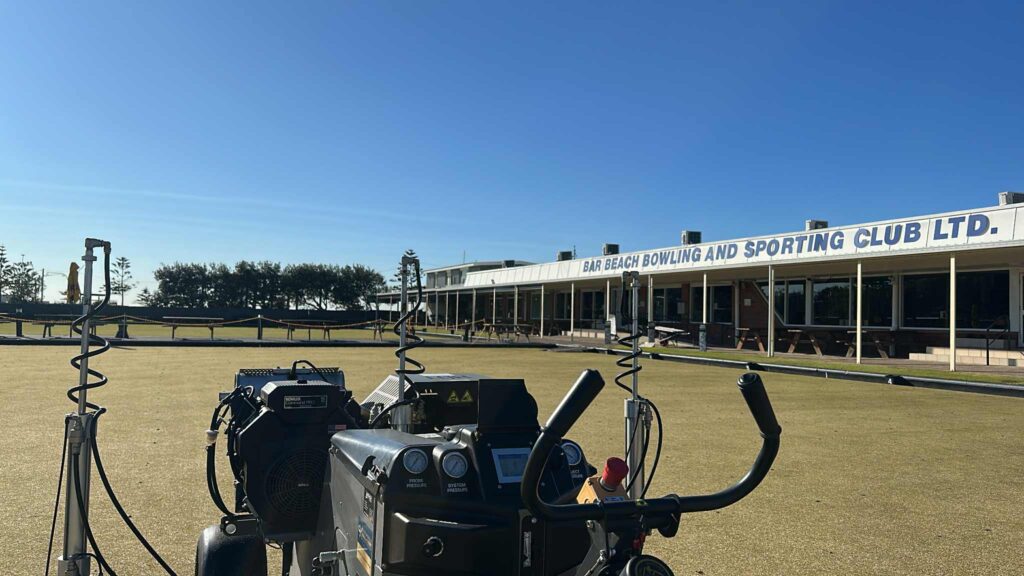
A: We got into cricket through a contact made by a good friend, Daryl Davidson (of IGFH), who put me in touch with a local sports club that was 200 metres from my house. I was never interested in cricket wickets, but Daryl convinced me that they’re easy. They’re actually quite addictive. Turning something from black to brown playable in four days is a great process. I’ve learned a lot from my employees who are absolute experts in their field.
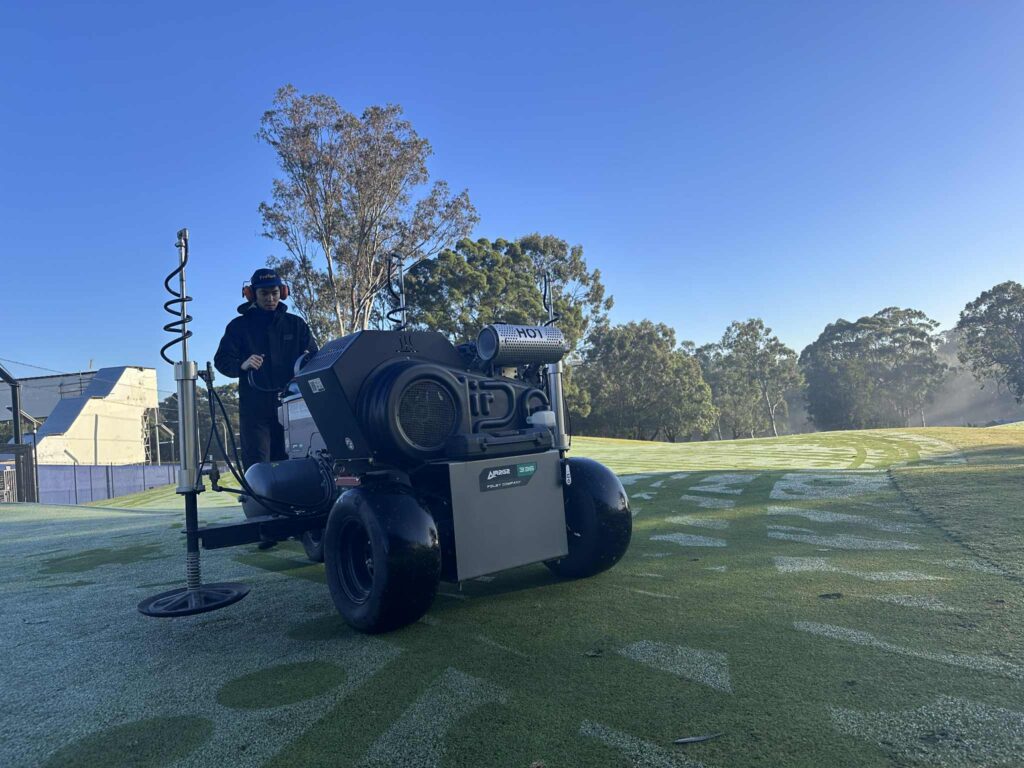
The wickets are one thing, but I wasn’t too phased about the sports pitches. It means I get to drive bigger machines and have a few more toys. That became a problem in itself because it put the pressure on me. The machines would vary from AU$50,000 to AU$120,000 per machine. I’ve had some machines that I’ve purchased for one job and never used again, but they’ve been paid for on that job with profit. Again, that’s the risk that you’ve got to take. You have to back yourself and say, “Someone else has done that, so why can’t I?” You might not be the master of the industry, but you can’t be the master of anything if you don’t start.
Q: There’s a lot of variation around the world with cricket wickets. In Australia, how would you typically prepare a wicket?
A: There are so many different aspects that come into it. There’s the saying: “prior preparation prevents poor performance.” Your renovation has to be good, your grass coverage has to be good, you have to show up on Monday to repair the damage, you have to be there on Saturday to make sure that the pitch forms during the day. Unless you’re a dedicated curator to that field, it’s hard to explain it. Every pitch is different. One of our boys looked after 20 sites. It’s the same sort of routine, but you’ve also got to adapt to the club or the game and the type of game that’s being played. There are so many different variables that come into play. I’m not the best, and I’ve employed people to be the experts, and I learn from them.
Q: How important is it to have good communication with the clubs, coaches, and volunteers that you work with?
A: It’s paramount. They’re your eyes and ears. They’ll get you into conversations that you aren’t privy to, as well. It can almost be poisonous if you work for a club with a bad culture. If we’re at a good club and the people are good, we’re there to help. You get back what you give out, too. Staff morale has to be high, and you have to set the standard.
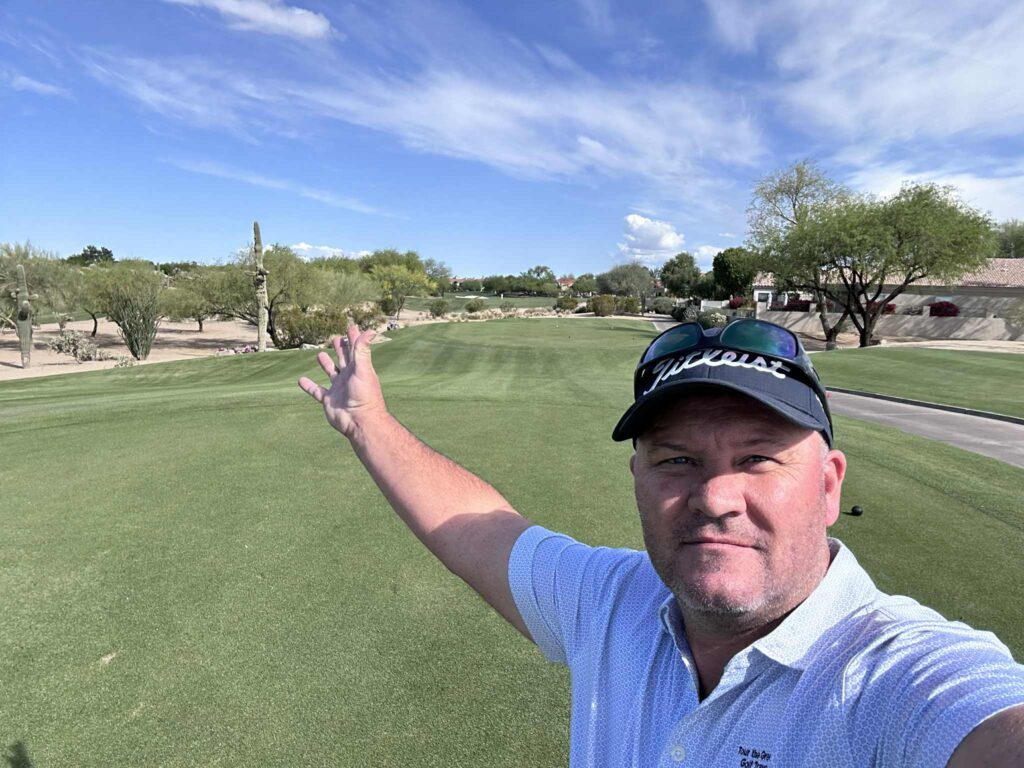
Q: You had a full circle moment with Ground Solutions Australia where you got back into golf, this time as a contractor. Can you tell us more about that?
A: We started renovating golf courses all around Sydney. Then, one of my employees had a connection with a club that wasn’t being well looked after by the current contractor, and they reached out to him. I helped him secure the job, and then COVID hit and we couldn’t do any other work. Once I was back in, I caught the bug. Word went around, and we started securing lots of clubs. I’m an avid golfer, and I’m lucky enough to work as a tour guide to the Masters every year for a friend, which involves playing some of the top golf courses in the States. That’s my two-week break every April.
Q: Where do you see Ground Solutions Australia heading? Is there a potential for further expansion?
A: There is. There’s a lot of competition, and you have to fight for every contract renewal. My number one goal is to look after what we’ve got, and we’re doing that. We’re getting better with our processes. We might be heading away from golf and moving into the private sector again, especially with our cricket knowledge and our ability to teach in-house. We’re open to all opportunities, and that’s a beautiful thing. All it takes is a calculator and a person with the right machinery, and I’ll jump in as long as there’s a guarantee that we’ll make some money. I have to be having fun, otherwise it’s not going to interest me.
Q: You’ve had a couple of IGFH members work for your business. How has this been beneficial, and is it something you can see continuing going forward?
A: Yes, we’ve had some really good members. Ryusei (Ando, who we interviewed here) has probably been one of my favourites. If they’re from a country where English isn’t the first language, I like to learn some of their language as they learn ours. If you want to become an international member, you don’t always have to look for work at the big clubs. The smaller clubs will appreciate you more because they need you, and there will be people there to teach you the skills.
Q: Based on your own experience, what’s one piece of advice that you would give to others entering into our industry?
A: Don’t be afraid of someone saying no. I’ve had plenty of “no”s. Before I did my sales career and I wanted to spray, I could have hassled until I got a “yes”. “No” will always lead to a “yes” eventually. When I used to write my list of “no”s in my sales job, the most I got in a single week, before I got a “yes”, was 130. It’s a battle, but you’ll get there.
Q: What has been the most challenging problem that you’ve faced in your career, and how have you dealt with it?
A: Probably the change between being a businessman with no kids and being a businessman with kids. They’re not going to be kids forever, and you can work harder when the kids are older and doing their own thing. The transition of having a sustained business that was basically an oiled machine and then opening the door back to nothing when I started Ground Solutions, that was another tough one. When you’re down, the “no”s tend to hurt a bit more. But you get up and go again. If it’s not fulfilling your life, you can turn back.
Q: If you could switch roles with any groundsman or greenkeeper in the world for a day, whose job would you choose and why?
A: It could be a few guys on a few different days, especially the fellas who really ride into the trade days. We go to Sage Valley (Golf Club) in the States, and I’d love to sit in on one of those American golf courses where it’s full business, just to be immersed. The Masters setup for that whole three-to-four months beforehand, that would be so cool just to see how that all works. I’d love to throw some stripes down at Wimbledon, that would be cool. There are so many guys that I’d swap with, and there probably aren’t many that would want to swap with me.
Q: How do you unwind and relax after a challenging day at work?
A: It depends on what I’ve got after work. I’ve got the kids running around and the landscaping projects at my own home, and all the bookwork. A shower, then a cool beer, that’s a good wind-down for me. I also write down everything for the next day before I go to bed, then it’s out, and there’s no excuse not to have a good night’s sleep.
Q: What is the one piece of greenkeeping equipment that you couldn’t live without, and how does it make your job easier and more enjoyable?
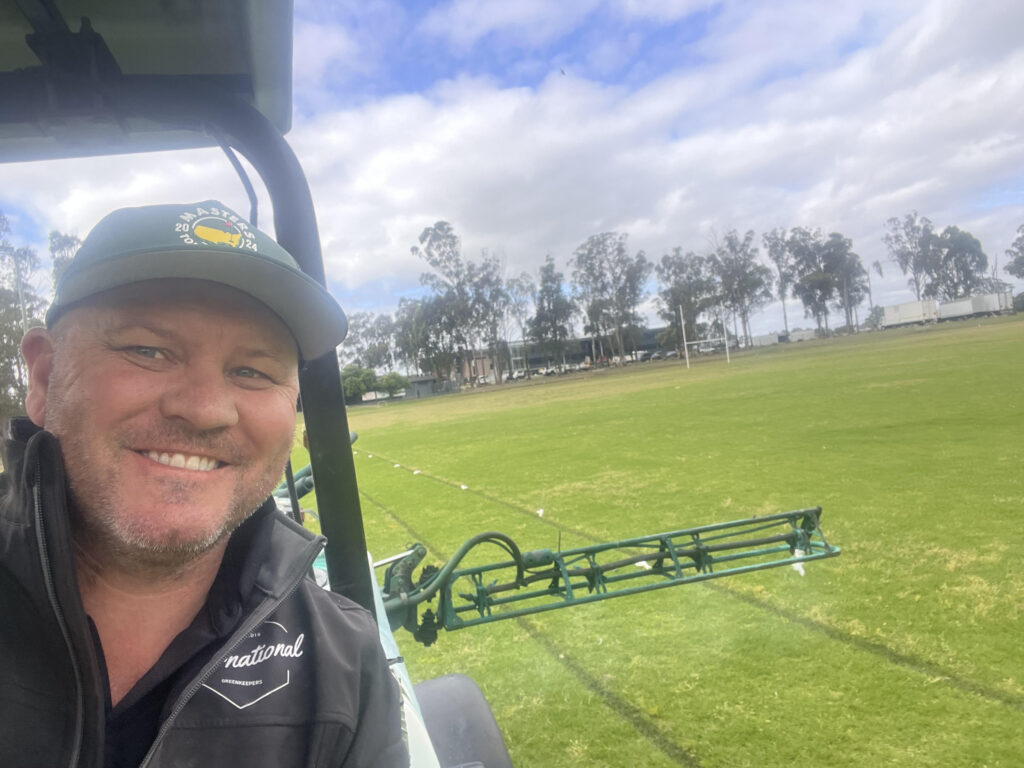
A: My brand-new John Deere sprayer is sensational, especially coming from a spraying background. The ease and usability of this—it’s so good. My spraying gear is my happy place.
Thanks to Dan for chatting with us for this interview. You can find him at www.groundaust.com or ask for Brad to put him in contact: just email info@internationalgreenkeepers.com.